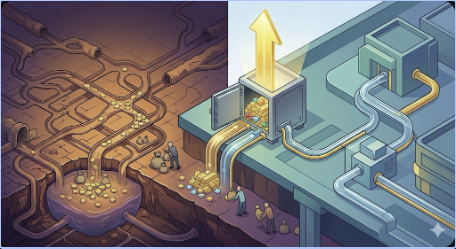
Walk into any supermarket chain in Dhaka and you will see immaculate merchandising, planogram compliance, and a brand manager who can tell you turnover per SKU per week. Walk into the kiranas, the corner shops, the pharmacy clusters, the petrol station forecourts — and you will see a brand opportunity that most multinationals have barely scratched.
Scale of the Opportunity
Bangladesh's ATC comprises an estimated 4.2 million retail outlets outside the organised modern trade tier. These outlets serve the overwhelming majority of the population and account for more than 70% of FMCG off-take by volume.
Yet the average brand invests less than 20% of its shopper marketing budget here.
Why ATC Is Harder — and Why That Is an Advantage
The fragmentation that makes ATC difficult to reach is also what makes it defensible once you are present. Competitors who have not built the trade relationships, the distribution network, and the activation infrastructure cannot replicate your position overnight.
Husky has spent years building exactly this infrastructure — the field force, the retailer trust, and the execution playbook that turns ATC from a cost centre into a growth engine.
Getting Started
The first step is mapping. Most brands do not have accurate outlet-level data for their ATC footprint. Before spend, before activation, before anything else — map the channel. Know where your brand is present, where it is absent, and where the competition is overindexed.
From that baseline, everything else follows.